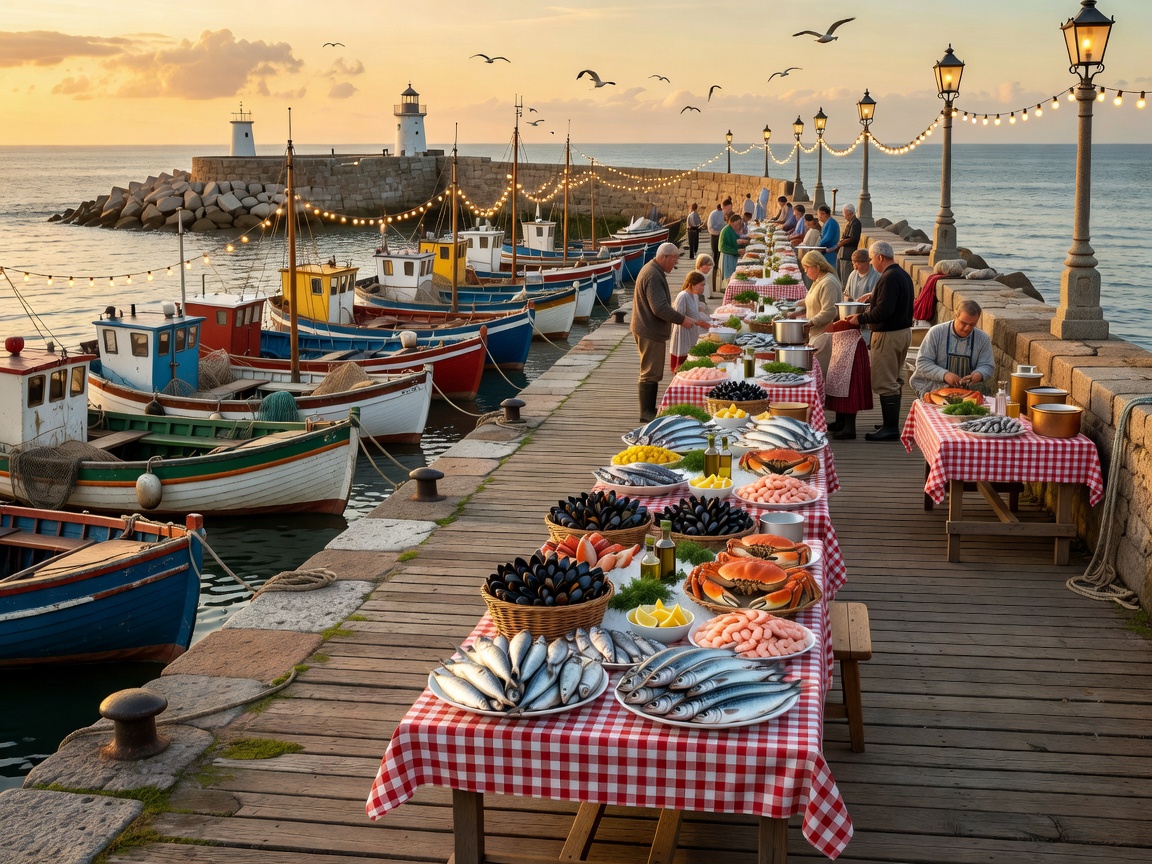
Choose oysters, harbour variety or chef events
Pick an oyster festival when you want shucking, provenance comparisons and sparkling-wine pairings. Choose a working-harbour celebration when you want several species, fishing demonstrations and family activities. Select a chef-led weekend when prepared dishes matter more than boats or markets, then review the programme before paying for premium admission.
Consider the Galway International Oyster and Seafood Festival for a lively city break built around oysters, competitions and evening events. Look at Falmouth Oyster Festival-style programming and other Cornish coastal events for native oyster traditions, demonstrations and regional drinks, while checking current schedules because individual festivals can pause or change format. Verify dates on official organiser pages, then reserve accommodation before transport fares rise.
Budget beyond the entrance ticket
Expect public harbour areas to be free at some events, while demonstrations, tasting sessions and evening entertainment may require tickets. Budget roughly £8–£18 for a small seafood plate, £15–£35 for substantial dishes and £60–£120 or more for paired dinners. Review portion sizes and token systems first, then allocate money across several producers instead of spending everything at the first stand.
Ask whether admission includes a tasting glass, food credit or reserved seating. Add parking, shuttle fares and booking charges before comparing events, because a free festival with expensive transport may cost more than a ticketed city event. Set a total day limit, then keep a small reserve for weather-related transport changes.
Eat shellfish safely
Tell vendors about allergies before ordering and ask about shared fryers, utensils and preparation surfaces. Do not assume a stall can eliminate cross-contact during a busy service. Carry prescribed emergency medication, then choose vendors that answer questions clearly and maintain orderly chilled displays.
Understand that raw oysters carry greater foodborne-illness risk than thoroughly cooked seafood. Pregnant people, older adults, young children and anyone with liver disease or a weakened immune system should seek current medical advice and avoid raw shellfish when advised. Choose cooked dishes when uncertain, then follow public-health guidance rather than festival marketing.
Inspect the service area before buying. Choose stalls that keep cold food properly chilled, cook hot food to order and protect ingredients from handling and weather. Eat purchases promptly instead of carrying them for hours, then wash or sanitise your hands before eating.
Ask useful sustainability questions
Ask what species you are buying, where it was caught or farmed, and which fishing method was used. Prefer clear answers tied to a named harbour, vessel, farm or regional fishery. Treat broad claims such as “ocean friendly” cautiously, then consult current independent seafood guidance because stock status and recommendations change.
Try abundant local species rather than demanding only familiar premium fish. Choose underused options recommended by reputable local conservation and fishing organisations, then ask chefs how to cook them at home. Avoid turning sustainability into a single permanent label, and check current seasonality and fishery information for the exact region.
Plan around a working coast
Check tides, weather and harbour restrictions before booking boat trips or quayside demonstrations. Coastal wind can stop activities even when inland conditions look calm, so keep cancellation terms and an indoor alternative ready. Wear a waterproof outer layer and shoes with grip, then stay behind barriers around wet docks and moving equipment.
Use park-and-ride services or rail where organisers recommend them. Historic harbour streets fill quickly, temporary road closures can disrupt navigation and late buses may run less frequently. Download the transport timetable, then arrange the journey home before drinking local beer, wine or cider.
Build a better tasting route
Arrive near opening time and begin with a producer talk or market walk. Taste delicate oysters or white fish before smoked, fried or heavily spiced dishes, then pause for water between plates. Book the final chef demonstration or dinner in advance, then leave enough time to reach it without rushing through the harbour.
Carry a reusable water bottle and tote, but do not bring containers for fresh seafood unless vendors confirm safe packing. Buy chilled products immediately before leaving, use an insulated bag with ice packs, then refrigerate them within the seller’s stated safety window. Ask for storage and cooking instructions, then discard any product that has been held unsafely.
Support the host town beyond the festival enclosure. Visit an independent fishmonger, bakery or café, respect working harbour access and dispose of shells and packaging correctly. Confirm dates, ticket conditions and weather updates directly with the organiser, then choose a celebration that connects you to the local fleet rather than only generic street food.