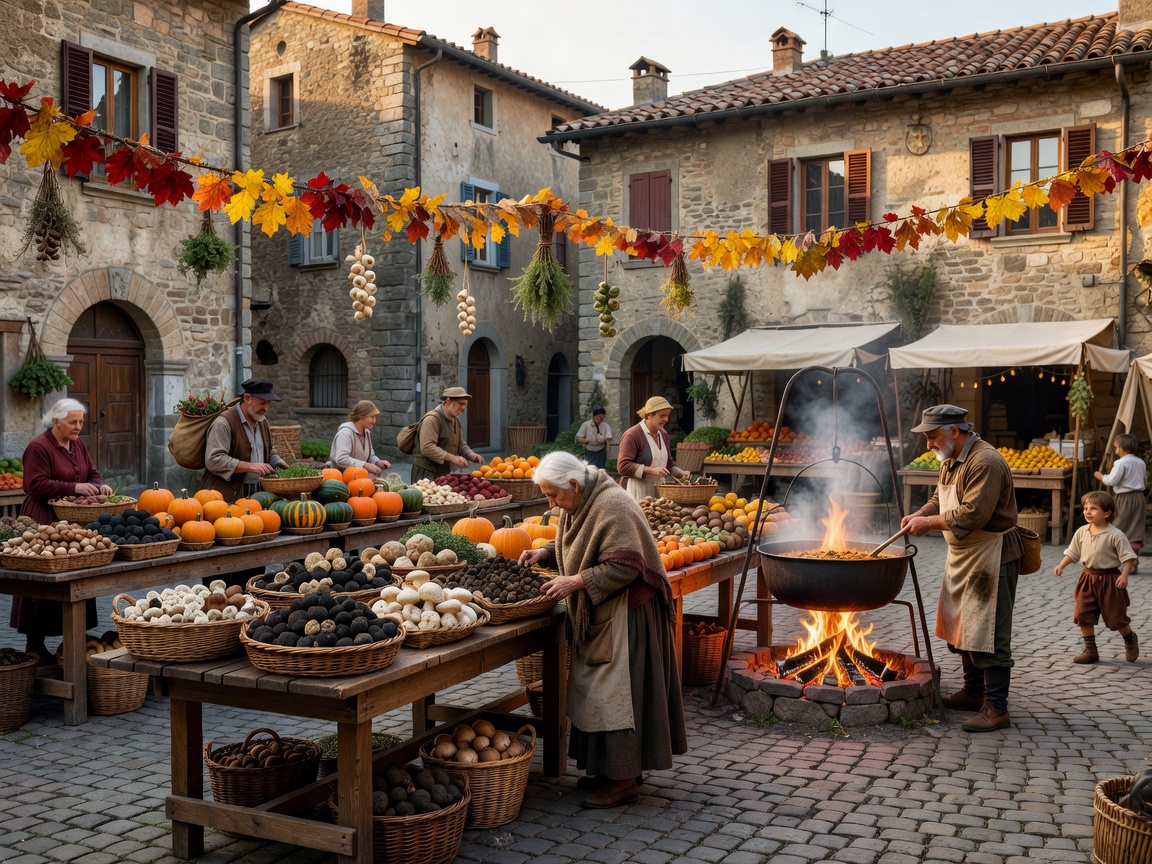
Choose Alba for scale and spectacle
Start with Alba when you want the largest concentration of white-truffle activity, polished tasting events and strong restaurant choice. The International Alba White Truffle Fair generally fills weekends across October and November, but dates and ticket formats change each year. Check the official calendar, buy market admission in advance when offered, then reserve Saturday dinner before arranging transport.
Expect the fair to feel commercial and crowded at peak hours. Arrive near opening time, inspect the sensory-analysis counters and ask sellers to explain origin, weight and grading. Use the market to compare aromas before purchasing, then eat truffle on a simple dish such as tajarin pasta, risotto or eggs where you can judge it clearly.
Choose Acqualagna or a smaller town for focus
Pick Acqualagna in the Marche when you want a town closely associated with year-round truffle trading and a major autumn white-truffle fair. Expect demonstrations, stands and menus at a smaller scale than Alba, with fewer international luxury trappings. Compare rail and bus connections before choosing a base, then arrange a car or transfer if evening schedules become thin.
Look at fairs in towns such as San Miniato in Tuscany when you prefer compact historic settings and day-trip potential. Smaller fairs can offer easier producer conversations and lower restaurant prices, but English-language programming and public transport may be limited. Contact tourism offices directly, then request confirmed dates and accessibility details before buying travel.
Understand the real cost
Budget separately for admission, tastings, a hunt and a restaurant meal. Market entry may range from free access at local fairs to roughly €5–€15 for ticketed areas, while guided tastings often cost €20–€60. Expect a truffle hunt with a licensed hunter and dog to cost roughly €70–€180 per person depending on group size and included lunch, then ask exactly what the advertised package covers.
Treat restaurant supplements carefully because fresh white truffle is priced by weight and changes sharply with supply. Ask to see the per-gram price before ordering, request the truffle to be weighed where customary, and confirm whether service is included. Set a ceiling before the server begins shaving, then choose one truffle course rather than adding it to every plate.
Buy fresh truffles intelligently
Smell before you buy and look for an intense, clean aroma without ammonia or excessive dampness. Choose a firm specimen with no soft spots, but accept irregular shape because appearance does not determine aroma. Ask when it was found and where it originated, then request an itemised receipt and any documentation required for travel.
Buy only what you can use quickly. Store a fresh truffle in a sealed container in the refrigerator, wrap it in absorbent paper and change the paper daily. Do not bury it in rice for extended storage because rice can draw out moisture and aroma, then plan to eat a prized white truffle within several days.
Check customs and agricultural restrictions before carrying fresh fungi across a border. Rules differ by destination, and soil residue or missing declarations can create problems. Prefer a seller experienced in export packaging when travelling internationally, then keep receipts and origin information with the product.
Book an ethical truffle hunt
Choose a guide who works with a trained dog, explains local permits and protects the woodland rather than staging careless digging. Ask whether the experience occurs in genuine habitat or a demonstration area, then confirm walking distance, terrain and weather policy. Wear muted outdoor clothing and waterproof shoes, then follow the hunter’s instructions around the dog.
Understand that a responsible hunt cannot guarantee a large find. Treat woodland knowledge, dog handling and ecology as the value of the tour, not the weight collected. Avoid providers promising unrealistic quantities or encouraging you to forage independently, then leave extraction to licensed local experts.
Build a balanced weekend
Schedule the market early on day one, eat a simple truffle lunch, then spend the afternoon visiting a winery or hazelnut producer. Book a hunt on the second morning and keep the afternoon flexible for weather changes. Leave time between tastings so every experience remains distinct, then use local seasonal products to broaden the trip beyond one expensive ingredient.
Reserve accommodation within walking distance of dinner whenever possible. Expect premium weekend rates in Alba and compare nearby towns such as Asti or Bra only after checking the final train. Verify festival dates and restaurant opening days directly, then secure the hunt, dinner and room in that order.